Mano Po: A Step-by-Step Guide to the Philippines’ Most Respectful Gesture
Learn how to perform the “Mano Po” gesture correctly. This guide covers the step-by-step process, cultural significance, and essential etiquette for Filipino families and visitors.
The Heart of Respect: How to Correctly Perform the Mano Po Tradition
In the Philippines, respect is not just a feeling; it is a physical action. Of all the beautiful customs found across the 7,641 islands, none is more iconic or heartwarming than the Mano Po. Often called “pagmamano,” this ancient gesture is a profound way for the younger generation to honor their elders and, in return, receive a blessing. 🇵🇭
The term comes from the Spanish word mano (hand) and the Filipino honorific po. Literally translating to “your hand, please,” the gesture is a bridge between generations, a silent acknowledgment of a person’s wisdom, and a vital thread in the fabric of Filipino family life. Whether you are a Filipino reconnecting with your roots or a visitor wanting to show proper etiquette, mastering the “Mano Po” is your key to the heart of Filipino culture.
How to Perform the Mano Po Gesture Correctly
Performing the gesture is simple, but the intention behind it must be sincere. Follow these steps to ensure you are doing it with the proper galang (respect).
Step 1: The Verbal Request
As you approach an elder, make eye contact and say, “Mano po” or “Pa-bless po.” This politely asks for their permission to initiate the gesture.
Step 2: Take the Right Hand
The elder will usually offer their right hand. Gently take their hand with your right hand. Ensure your grip is light and respectful; never pull or tug.
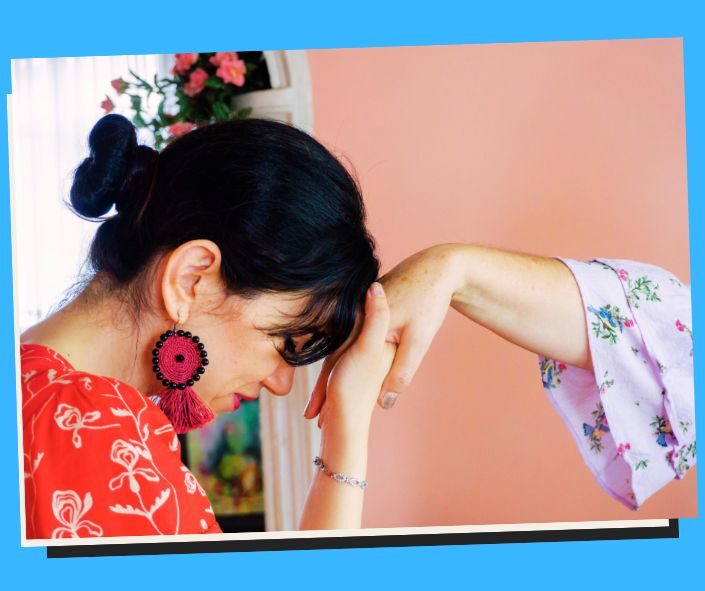
Step 3: The Bow
Slightly bow your head or bend your knees. The mano is a humble gesture, and lowering your head signifies your recognition of the elder’s status and wisdom.
Step 4: The Touch
Bring the back of the elder’s hand (the dorsal side) up to your forehead. Press it lightly against your skin for a brief second.
Step 5: Receive the Blessing
As you touch their hand to your forehead, the elder will typically respond with a blessing, such as “God bless you,” or simply a gentle nod. Some may even make a small Sign of the Cross over you.
Step 6: Release and Smile
Gently release their hand and return to an upright position. A warm smile or a simple “Salamat po” (Thank you) completes the interaction.
When and Who to “Mano”
- The Primary Circle: Traditionally, this is done for parents, grandparents, godparents (ninong/ninang), and priests.
- The Extended Family: Aunts and uncles who are at least one generation older than you.
- The “Order of Operations”: In a large family gathering, it is customary to mano to the oldest person in the room first, then proceed down the hierarchy of age.
- Special Occasions: It is expected upon arriving at a home, during Christmas gatherings, or after a religious service.
Benefits of Practicing Pagmamano
- Strengthens Family Bonds: It creates a physical point of connection between the youth and the elderly.
- Teaches Humility: The act of bowing one’s head is a powerful lesson in modesty and respect.
- Preserves Culture: Continuing the tradition prevents the “westernization” of unique Filipino social values.
- Promotes Mindfulness: It forces a pause in our busy lives to acknowledge the people who came before us.
- Spiritual Connection: For many, the “blessing” received is a genuine spiritual boost that brings a sense of peace.
Pros and Cons
Pros
- It is universally recognized as a sign of a “well-raised” (may pinag-aralan) individual.
- It bridges communication gaps when words aren’t enough.
- It is an easy way for non-Filipinos to show they value local customs.
Cons
- The “Old” Factor: Some modern elders find it makes them feel “too old” and may prefer a beso-beso (cheek kiss) instead.
- Hygiene Concerns: Post-pandemic, some may be hesitant about physical touch; always watch for the elder’s body language first.
- Physical Strain: For those with back or neck issues, the constant bowing at large reunions can be tiring.
Key Takeaways
- Right Hand Only: Always use your right hand to take the elder’s right hand.
- Words Matter: Don’t forget to say “Mano po” first.
- Follow the Lead: If an elder offers their cheek instead of their hand, don’t force the mano.
- Priority of Age: Respect the hierarchy; the eldest gets the first blessing.
- A Sign of Love: At its core, the mano is a love language between a child and their elders.
Frequently Asked Questions
1. Is it okay for a non-Filipino or foreigner to “Mano”?
Absolutely! In fact, most Filipinos find it incredibly charming and respectful when a visitor makes the effort to learn local customs. It is seen as a sign of high emotional intelligence and cultural appreciation.
2. At what age should I stop performing the “Mano”?
In traditional Filipino culture, there is no “expiration date” for respect. It is common to see 50-year-old professionals mano to their 80-year-old parents. As long as the person is an elder to you, the gesture remains appropriate.
3. What if the elder’s hands are full or they are busy?
Common sense prevails here. If they are carrying groceries or cooking, do not interrupt their physical task. Instead, simply bow slightly and say, “Mano po” or “Bless po.” They will usually acknowledge you with a nod or a verbal blessing.
4. Why is the forehead the specific point of contact?
In many Southeast Asian cultures, the head is considered the most sacred part of the body—the seat of the spirit. By touching the elder’s hand to your forehead, you are symbolically receiving their wisdom and grace into your own spirit.
5. What is the difference between “Mano” and “Beso-Beso”?
The Mano is strictly for elders and signifies deep, formal respect. The Beso-beso (cheek-to-cheek kiss) is more casual and is generally used between peers, friends, or younger aunts and uncles in urbanized areas.
6. Can I “Mano” to someone who is only a few years older than me?
Usually, no. The gesture is reserved for those who are at least a generation older (parents, grandparents, aunts/uncles). For people only slightly older, using “Po” and “Opo” in conversation is the more appropriate sign of respect.
7. Should I “Mano” to a priest even if he is younger than me?
Yes. In the Philippines, the mano to a priest or religious leader honors their “spiritual elder” status and their office rather than their biological age.
8. What if the elder pulls their hand back?
Some modern elders (especially those who want to feel younger!) might pull their hand back and offer a cheek for a kiss instead. If this happens, don’t worry, just follow their lead. It’s their way of saying, “We’re close enough that we don’t need to be so formal.”
9. Do I use the left or right hand?
Always use your right hand to take their right hand. In traditional customs, the right hand is considered the “hand of blessing” and the “clean” hand for social interactions.
10. What is the proper verbal response after the gesture?
Once the elder says “God bless you,” a simple and warm “Salamat po” (Thank you) is the perfect way to conclude the interaction before starting your conversation.
Conclusion
The Mano Po is a simple act with a profound message: I see you, I honor your journey, and I value your presence in my life. In a world that is moving faster than ever, taking five seconds to bow your head and receive a blessing is a way to stay grounded in what truly matters: family and respect. So, the next time you see your Lolo or Lola, don’t just say hello. Reach for their hand, bow your head, and keep this beautiful Filipino flame alive. 🕯️
Link Resources
- Official Gazette of the Philippines – Filipino Customs: Search for historical insights on Filipino traditions and cultural preservation.
- National Commission for Culture and the Arts (NCCA): The primary government agency for Philippine culture, offering deep dives into the roots of “Pagmamano.”
- Department of Foreign Affairs (DFA) – Cultural Diplomacy: Often features guides for foreigners on how to navigate Filipino social etiquette.
- The Kahimyang Project – Filipino Manners and Customs: A fantastic historical resource for traditional Filipino values and pre-colonial habits.
- Seasite Northern Illinois University – Tagalog Language & Culture: An academic resource that explains the linguistic and cultural nuance of “Po,” “Opo,” and the gesture itself.
Key Phrases
Mano po tutorial, how to do pagmamano, Filipino respect for elders, tradition of mano po, signs of respect in the Philippines, Filipino family etiquette
Best Hashtags
#ManoPo #FilipinoTraditions #PinoyCulture #RespectElders #FamilyFirstPH #Pagmamano #FilipinoHeritage #ProudPinoy #Blessings #MannersMatter
Disclaimer
The information is for educational purposes only and subject to change, and it is highly recommended to consult local authorities for the latest and most accurate updates. We do not constitute endorsement of any specific technologies or methodologies or endorse of any specific products or services. For queries, questions, corrections, or updates, please send us a message through our Contact Us page. We welcome feedback to ensure our guides remain accurate, updated, and helpful for everyone