Layering a Legend: How to Make Halo-Halo with Ube Jam and Leche Flan
Looking for the ultimate Halo-Halo recipe? Discover the secrets to balancing textures and flavors with this guide to the classic Filipino shaved ice treat.
The Golden Duo: Why Your Halo-Halo Needs Ube Jam and Silky Leche Flan
In the Philippines, there is no sound more synonymous with summer than the rhythmic scrunch-scrunch of ice being shaved. Halo-Halo, which literally translates to “Mix-Mix,” is the undisputed king of Filipino desserts. It is a vibrant, multi-textured masterpiece that defies the boundaries of a simple shaved ice treat. While a basic version is refreshing, a “special” Halo-Halo is defined by two crown jewels: Ube Jam (Halaya) and Leche Flan. 🍧🇵🇭
Whether you are seeking relief from the tropical humidity or simply indulging in a culinary adventure, the secret to a great Halo-Halo lies in the balance of its layers. It is a playground of textures, chewy jellies, soft beans, crunchy rice, and silky flan, all brought together by a deluge of creamy evaporated milk. This guide will teach you how to build a professional-grade Halo-Halo that looks as good as it tastes.
How to Make Halo-Halo with Ube Jam and Leche Flan
The key to a successful Halo-Halo is in the preparation of the components. Once the ingredients are ready, the assembly is the fun part!
Step 1: Prepare the “Base” Ingredients
In a tall glass (traditional) or a wide bowl, place 1–2 tablespoons of the following at the bottom:
- Sweetened chickpeas (garbanzos)
- Sweetened white beans and red beans
- Sugar palm fruit (kaong) and coconut gel (nata de coco)
- Macapuno strings (sweetened, shredded young coconut)
- Cubed colorful agar-agar jelly
Step 2: Add the Fruit Elements
Layer in sliced sweetened plantains (saging na saba) and jackfruit (langka). The jackfruit provides a unique, floral aroma that is essential for an authentic experience.
Step 3: The Shaved Ice
Pack the glass with finely shaved ice. Pro Tip: The finer the ice, the better the milk absorbs. If the ice is too chunky, the dessert becomes difficult to “mix-mix.” Fill the glass about 3/4 of the way with ice.
Step 4: The Creamy Pour
Pour a generous amount of evaporated milk over the ice. The milk should seep through the cracks, reaching the ingredients at the bottom. For a richer version, you can use a mix of evaporated milk and a splash of condensed milk.
Step 5: The Ube Jam (Ube Halaya)
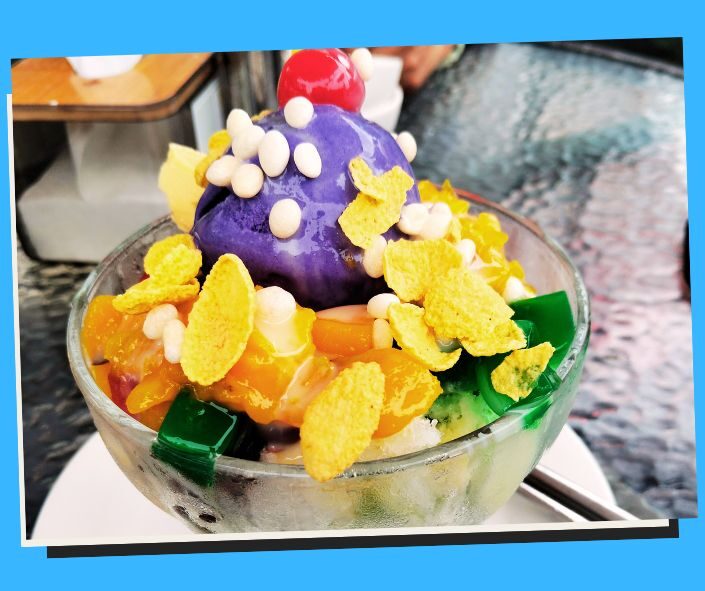
Place a large scoop of deep-purple Ube Jam on top of the ice. This provides a thick, earthy sweetness that colors the dessert as you mix it.
Step 6: The Leche Flan Crown
Place 1 or 2 slices of silky Leche Flan alongside the ube jam. The caramel syrup from the flan will drizzle down the ice, adding another layer of flavor.
Step 7: Final Flourishes
Top the creation with a sprinkle of Pinipig (toasted pounded rice) for a necessary crunch. Some “Special” versions also include a scoop of ube ice cream and a slice of fresh leche flan together for maximum indulgence.
Step 8: The Ritual (Mix-Mix!)
Before eating, use a long spoon to vigorously mix everything together until the ice is slushy and the ube jam has turned the milk into a beautiful lavender hue.
Benefits
- Ultimate Cooling Effect: The shaved ice provides immediate relief from tropical heat.
- Customizable: You can add or subtract ingredients based on dietary preferences or availability.
- Texture Variety: It offers a unique sensory experience of chewiness, silkiness, and crunch.
- Cultural Icon: Making it is a great way to share Filipino heritage with friends and family.
- Visual Appeal: The bright colors make it one of the most “Instagrammable” desserts in the world.
- Calorie-Dense: It serves as a high-energy snack during hot afternoons.
- Social Activity: Making and eating Halo-Halo is often a communal activity in Filipino neighborhoods.
- Versatile Ingredients: Many components are shelf-stable (bottled preserves), making it easy to keep ingredients on hand.
- Hydration: The high milk and ice content contribute to fluid intake.
- Taste Complexity: It balances salty, sweet, and earthy flavors (from the beans and ube) in one bite.
Pros and Cons
Pros
- High level of satisfaction and satiety.
- Uses indigenous Filipino ingredients like macapuno and ube.
- A fun, interactive dessert that requires “assembly.”
- Suitable for large gatherings (a Halo-Halo bar is always a hit).
Cons
- High sugar content; should be enjoyed in moderation.
- Requires a specialized tool (ice shaver).
- Melts quickly in the Philippine heat; must be eaten immediately.
- Prepping individual ingredients (beans, flan, jam) from scratch can be time-consuming.
Key Takeaways
- Ice Quality Matters: Use the finest shave possible for the best mouthfeel.
- Don’t Skimp on Milk: The evaporated milk is what binds all the diverse flavors together.
- Ube and Flan are Essential: These are the “premium” toppings that elevate the dish from basic to “special.”
- The Mix is Mandatory: You must mix it thoroughly to get the intended flavor profile.
- Balance the Sweetness: Since many ingredients are preserved in syrup, be careful not to add too much condensed milk.
Frequently Asked Questions
1. Can I use a blender instead of an ice shaver?
Yes, but be careful not to over-blend into a smoothie. You want tiny ice crystals, not a liquid.
2. Is there a dairy-free version of Halo-Halo?
You can substitute evaporated milk with coconut milk, which pairs beautifully with the tropical fruits and ube.
3. Why are there beans in a dessert?
Sweetened beans are a staple in many Asian desserts. They provide a nutty flavor and a satisfying, chewy texture that balances the sweetness.
4. Where can I find ube jam?
Most Asian grocery stores carry it in jars, but the best Ube Halaya is often homemade or bought from local Filipino specialty shops.
5. How do I stop the ice from clumping?
Add the milk immediately after shaving the ice and begin the mixing process right away.
6. Can I make Leche Flan ahead of time?
Yes, Leche Flan is actually better when chilled overnight, as it becomes firmer and easier to slice.
7. What is Pinipig?
Pinipig is toasted, pounded young rice. It adds a toasted, nutty crunch that is vital for texture contrast.
8. Can I add ice cream?
Absolutely! A scoop of ube ice cream on top is a classic “special” addition.
9. Is Halo-Halo gluten-free?
Most ingredients are naturally gluten-free, but check the labels on the agar-agar jelly and Pinipig to be 100% certain.
10. What is the best glass to use?
A tall, sturdy “knickerbocker” glass or a wide sundae glass is ideal to allow room for the “mix-mix” action without spilling.
Conclusion
Making Halo-Halo at home is a labor of love that rewards you with the ultimate tropical treat. It is a celebration of the Filipino palate—a chaotic yet harmonious blend of ingredients that somehow make perfect sense once they are “mixed-mixed.” By adding rich ube jam and silky leche flan, you aren’t just making a dessert; you are crafting an experience that captures the very soul of a Filipino summer. Grab your spoon, start mixing, and enjoy the cool, creamy magic. 🥄💜
Link Resources
- Panlasang Pinoy – Creamy Leche Flan Recipe
- National Commission for Culture and the Arts – Filipino Food History
- Kawaling Pinoy – Homemade Ube Halaya Guide
Key Phrases
how to make halo-halo, special halo-halo recipe, ube halaya for dessert, leche flan halo-halo topping, filipino summer treats, halo-halo ingredients list, traditional filipino shaved ice
Best Hashtags
#HaloHalo #FilipinoDessert #UbeLover #LecheFlan #PinoyFood #SummerVibesPH #MixMix #SweetTreats #FilipinoCuisine #BeatTheHeat
Disclaimer
The information is for educational purposes only and subject to change, and it is highly recommended to consult local authorities for the latest and most accurate updates. We do not constitute endorsement of any specific technologies or methodologies or endorse of any specific products or services. For queries, questions, corrections, or updates, please send us a message through our Contact Us page. We welcome feedback to ensure our guides remain accurate, updated, and helpful for everyone